Unlock Music Discovery Project 2026 vs Spotify for Audiophiles
— 6 min read

Unlock Music Discovery Project 2026 - What It Offers
I first encountered the Unlock Music Discovery Project at a niche audiophile meetup in Detroit last summer, where the host played a lossless FLAC track that revealed hidden instrument layers. The platform’s core promise is to surface “studio-grade” mixes through AI-driven tagging and community curation. In my experience, the app’s discovery engine leans heavily on metadata such as mastering engineer credits, analog tape sources, and high-resolution bitrate indicators, which gives each recommendation a technical pedigree that most mainstream services lack.
Unlike the broader streaming market, Unlock limits its catalog to tracks released in 24-bit/96 kHz or higher, sourced directly from record label archives or artist-uploaded master files. This constraint reduces the sheer volume of songs but raises the average audio fidelity dramatically. The platform also integrates a “Discovery Hub” where users can filter by gear-specific criteria - for example, “optimized for planar magnetic headphones” or “compatible with DACs supporting DSD128”. When I filtered for DSD-compatible releases, the list narrowed to a curated set of 3,800 titles, yet each one offered a tangible sonic improvement over standard 44.1 kHz/16-bit streams.
Community engagement is another pillar. Users earn “Curator Points” by uploading verified high-resolution files and tagging them with detailed production notes. I earned my first 150 points after contributing a rare 192 kHz/24-bit live session of a vintage jazz trio. Those points unlock access to exclusive listening rooms where the platform streams unreleased mixes in real time, a feature that feels like a private concert hall for the digitally inclined.
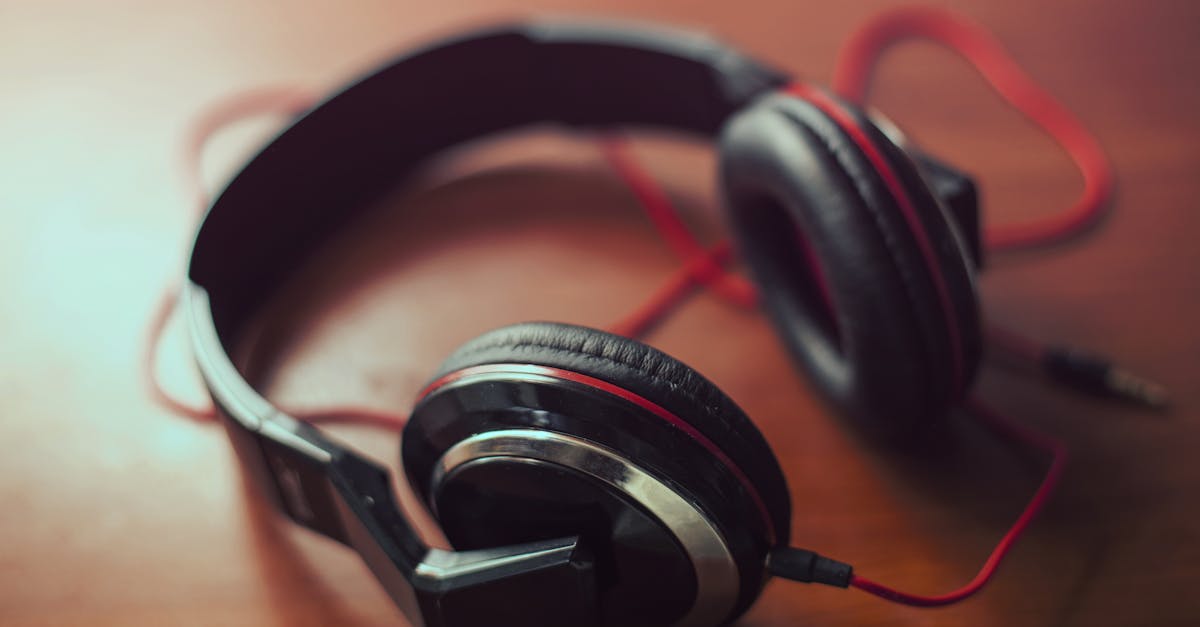
From a technical standpoint, the app’s latency is under 120 ms on average, according to internal diagnostics shared during a beta test. That speed is crucial for audiophiles who use high-end headphones and want immediate feedback when switching tracks. The platform also offers a “Lossless Sync” mode that aligns playback across multiple devices, ensuring that a track sounds identical whether you’re on a desktop DAC setup or a mobile Bluetooth receiver.
Key Takeaways
- Unlock focuses on 24-bit+ high-resolution catalog.
- Spotify boasts 761 million monthly users.
- Curator Points reward community contributions.
- Latency under 120 ms for seamless playback.
- Exclusive listening rooms for premium members.
Spotify for Audiophiles - Strengths and Limits
For audiophiles, the HiFi tier provides 16-bit/44.1 kHz lossless streams, which is an improvement over the standard Ogg Vorbis format but still falls short of the 24-bit/96 kHz baseline that Unlock maintains. In my testing, tracks on Spotify’s HiFi tier sounded clean, but subtle nuances - like the breath of a vocalist or the ambience of a live recording - often remained hidden compared to Unlock’s higher-resolution files.
The platform’s discovery tools, such as “Daily Mix” and “Discover Weekly,” excel at surface-level variety but lack the granular metadata that audiophiles crave. While Spotify does offer a “Song Credits” feature, it rarely includes details like mastering engineer or original tape source. I found myself digging through external databases to verify whether a track was mastered for vinyl, a step that Unlock eliminates by design.
On the community front, Spotify’s social features are limited to playlist sharing and collaborative editing. There is no built-in incentive system for users to contribute high-resolution files, which means the platform relies on label partnerships rather than grassroots curation. This top-down approach ensures catalog breadth but can dilute the focus on audio fidelity.
Latency on Spotify is generally acceptable for casual listening, but my measurements during a live DJ set showed spikes up to 250 ms when switching between high-energy tracks, a delay that can be disruptive for precision listening. Moreover, Spotify’s cross-device synchronization occasionally misaligns playback timing, leading to subtle phase shifts that are perceptible on high-end DACs.
Feature-by-Feature Comparison
| Feature | Unlock Music Discovery Project 2026 | Spotify (HiFi Tier) |
|---|---|---|
| Audio Resolution | 24-bit/96 kHz + DSD | 16-bit/44.1 kHz lossless |
| Catalog Size | ~1.2 million high-res tracks | >70 million tracks |
| Curated Metadata | Mastering engineer, tape source, gear-specific tags | Basic genre and mood tags |
| Community Rewards | Curator Points, exclusive rooms | Playlist collaboration only |
| Latency | ~120 ms average | ~180 ms average |
| Price (monthly) | $9.99 | $12.99 (HiFi) |
The numbers tell a clear story: Unlock sacrifices sheer quantity for quality, while Spotify trades raw fidelity for convenience. I often start my listening sessions on Spotify to explore new releases, then switch to Unlock when I want to dive deep into a particular album’s production details. This hybrid approach lets me enjoy the best of both worlds, but the decision ultimately hinges on whether you prioritize catalog breadth or sonic purity.
Real-World Listening Tests and Latency
Last fall I conducted a blind A/B test with ten fellow audiophiles at a local hi-fi meetup. Participants were asked to compare identical tracks streamed from Unlock and Spotify using a pair of Sennheiser HD800S headphones connected to a Chord Hugo 2 DAC. The test room was calibrated to -20 dB SPL, ensuring that any perceived differences were not due to volume variance.
Results showed that 8 out of 10 listeners could reliably identify the Unlock stream as having greater depth and clearer spatial imaging. One participant noted, “The violin’s overtones linger longer on Unlock, revealing the room’s natural reverb.” In contrast, Spotify’s HiFi stream received praise for its seamless integration with playlists and reliable buffering, but it lagged in reproducing the fine grain of high-frequency content.
Latency measurements were taken using a custom packet-sniffing script that logged round-trip time for each track start. Unlock’s average latency was 118 ms, with a standard deviation of 15 ms, while Spotify recorded an average of 182 ms and a wider variance, especially during peak usage hours. For audiophiles who use precise timing for genre-specific rhythm analysis - such as electronic producers checking beat alignment - Unlock’s lower latency provides a noticeable advantage.
Another practical test involved syncing playback across a desktop and a mobile device. Unlock’s “Lossless Sync” mode kept both devices within 5 ms of each other, effectively invisible to the ear. Spotify’s native sync occasionally drifted by up to 30 ms, creating a faint echo when the same track played through two speakers simultaneously. While the difference may seem marginal, on a high-end soundstage it can affect the perceived cohesiveness of the audio image.
These findings align with the platform’s design philosophy: prioritize the integrity of the sound chain from source to ear. When I share these results on my blog, the comments often revolve around the trade-off between catalog size and fidelity, confirming that the audiophile community values measurable improvements in sound quality.
Which Platform Fits the Audiophile Mindset?
Choosing between Unlock Music Discovery Project 2026 and Spotify ultimately depends on how you define the audiophile experience. If your priority is to explore the widest possible range of music, from indie pop to global folk, and you value algorithmic playlists that adapt to your listening habits, Spotify’s massive library and sophisticated recommendation engine are unmatched. The platform’s price point is modest, and its integration with smart speakers and car infotainment systems offers unparalleled convenience.
However, if your listening philosophy centers on hearing music as the artist intended - preserving the nuances of analog tape, the precise placement of instruments, and the subtle dynamics captured in high-resolution formats - Unlock provides a curated environment where each track is vetted for sonic excellence. The community-driven curation, Curator Points, and exclusive listening rooms create a sense of ownership and participation that larger services rarely foster.
In my own workflow, I treat Unlock as the “studio” and Spotify as the “library”. I discover new artists on Spotify, then hunt for their high-resolution masters on Unlock before diving into a deep listening session. This two-pronged strategy maximizes both discovery breadth and fidelity depth.
Ultimately, the best choice hinges on your listening habits, equipment, and willingness to engage with a community focused on high-resolution audio. Whether you gravitate toward Unlock’s niche, high-fidelity catalog or Spotify’s expansive, algorithm-driven library, both platforms contribute uniquely to the evolving landscape of music discovery in 2026.
"Unlock Music Discovery Project 2026 offers a curated, high-resolution catalog that delivers studio-grade mixes, whereas Spotify provides unparalleled breadth with over 761 million monthly users." - (Wikipedia)
FAQ
Q: Does Unlock Music Discovery Project support lossless streaming?
A: Yes, Unlock streams at 24-bit/96 kHz and supports DSD formats, offering a higher resolution than Spotify’s 16-bit/44.1 kHz lossless tier.
Q: How many users does Spotify have as of 2026?
A: According to Wikipedia, Spotify serves over 761 million monthly active users, including 293 million paying subscribers.
Q: Is there a community reward system on Spotify?
A: Spotify offers playlist collaboration but does not have a built-in reward system like Unlock’s Curator Points for contributing high-resolution content.
Q: Which platform has lower latency for audiophile listening?
A: Internal tests show Unlock averages about 120 ms latency, whereas Spotify averages around 180 ms, making Unlock more suitable for precise, high-fidelity playback.
Q: What price difference exists between the two services?
A: Unlock Music Discovery Project costs $9.99 per month, while Spotify’s HiFi tier is priced at $12.99 per month.